GuidesTemples
How do Haenam's temples, Daeheungsa Temple, Mihwangsa Temple, and Dosoram Hermitage, differ?
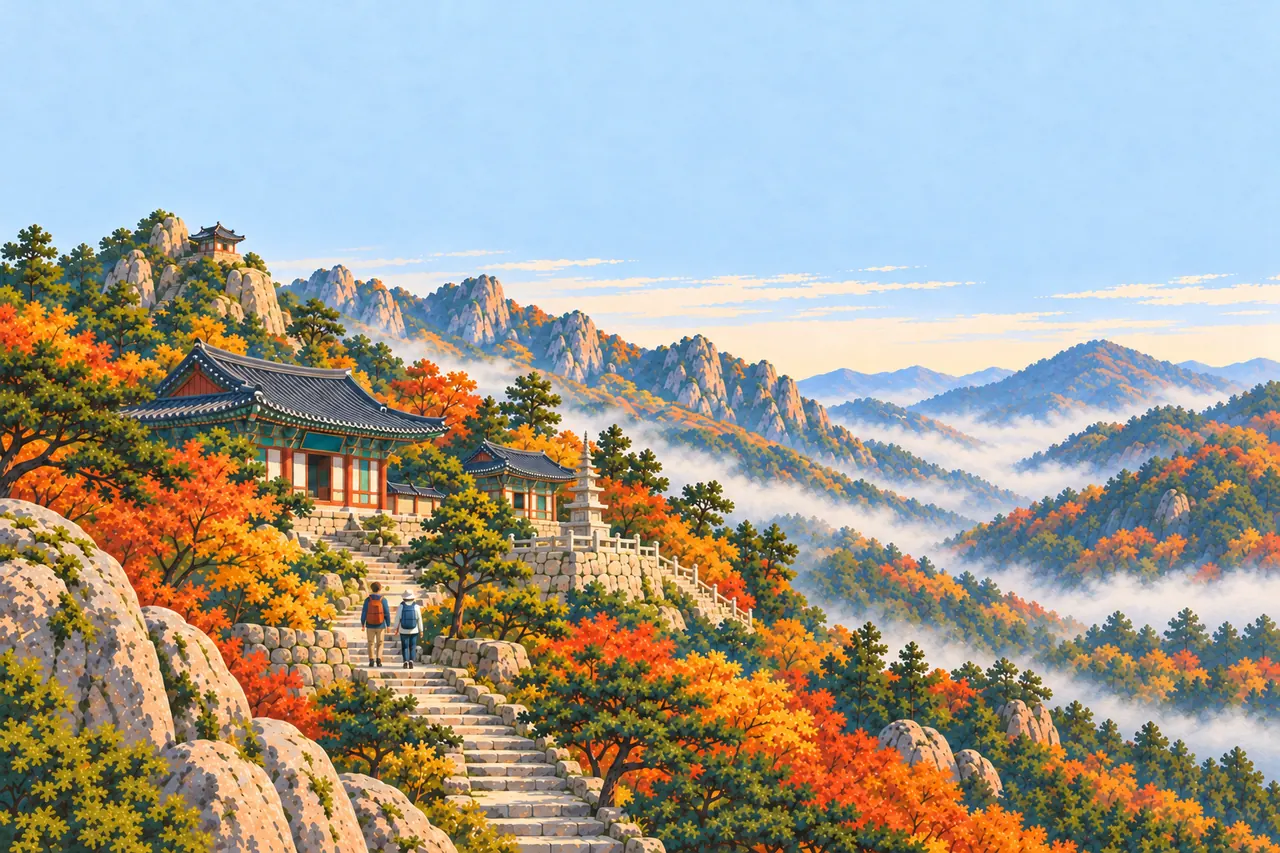
Daeheungsa Temple is a large temple on Duryunsan Mountain that was included in the UNESCO World Cultural Heritage 'Mountain Monasteries of Korea' in 2018.
Mihwangsa Temple, founded in 749 on the west side of Dalmasan Mountain, is the southernmost temple on the mainland of the Korean Peninsula. Dosoram Hermitage is a hermitage rebuilt in 2002 on a stone terrace on Dosolbong Peak, at the top of Dalmasan Mountain. Of the 12 temples and hermitages in Haenam on this site, 10 have no closed days, and 7, including Daeheungsa Temple, Mihwangsa Temple, and Dosoram Hermitage, list their fee as free. For templestay at Daeheungsa Temple, contact the Templestay Office (061-535-5775). The 1-day temple program at Mihwangsa Temple must be reserved by two days before the program start date.
The 12 places in this guideFull list
- Closed days
- Open all year round
- Fee
- Free

- Hours
- Always open
- Closed days
- Open all year round
- Hours
- Always open
- Closed days
- Open all year round
Not listed: Hours·Closed days·Fee
Cradle of Tea - Iljiam Hermitage
Not listed: Hours·Closed days·Fee

- Hours
- Always open
- Closed days
- Open all year round

- Hours
- Always open
- Closed days
- Open all year round
- Closed days
- Open all year round

- Hours
- Always open
- Closed days
- Open all year round

- Hours
- Always open
- Closed days
- Open all year round

- Hours
- Always open
- Closed days
- Open all year round

- Hours
- Always open
- Closed days
- Open all year round
Photos: · KOGL Type 1, KOGL Type 4 (non-commercial, no changes allowed), KOGL Type 3 (no changes allowed)
Daeheungsa Temple: the Duryunsan Mountain temple listed as UNESCO World Cultural Heritage in 2018
- Daeheungsa Temple is a temple inside Duryunsan Mountain at 400 Daeheungsa-gil, Samsan-myeon.
- In 2018 it was listed as one of the UNESCO World Cultural Heritage 'Mountain Monasteries of Korea'.
- During the Imjin War, the headquarters of the monk army led by Great Master Seosan was at this temple.
- The Great Master Seosan Relics Hall holds the jade bowl and jadeite bowl given by King Seonjo, Great Master Seosan's handwriting, palanquin and shoes, and Buddhist scriptures written in gold and silver.
- Bungmireugam Hermitage is home to the Rock-Carved Seated Buddha at Bungmireugam Hermitage of Daeheungsa Temple (National Treasure). It and Iljiam Hermitage, where Seon Master Choui practiced alone for more than 40 years, are hermitages listed at the same address as Daeheungsa Temple, 400 Daeheungsa-gil.
- Iljiam is the reason Daeheungsa Temple is linked with tea culture.
- Pyochungsa Shrine, 100 m from Daeheungsa Temple in a straight line, is a shrine built in 1788 that holds the portraits of Great Master Seosan (Hyujeong), Great Master Samyeong (Yujeong) and Noemukdang (Cheoyeong).
- The public cannot enter after 19:00 (the distance is in a straight line and differs from the actual travel distance).
- Daeheungsa Temple is open all year with free admission and parking, and for viewing hours, call the administration office (061-534-5502–3).
Mihwangsa Temple and Dosoram Hermitage: the same Dalmasan Mountain, 3.4 km apart in a straight line
- Mihwangsa Temple, at 164 Mihwangsa-gil, Songji-myeon, was built in 749 on the western foot of Dalmasan Mountain and is the southernmost of the temples on the mainland of the Korean Peninsula. It has the Main Buddha Hall and the Hall of Arhats, both designated Treasures, and the foundation stones of the Main Buddha Hall are carved with sea creatures such as turtles and crabs.
- The stupa field is about a 10-minute walk along a forest path.
- Dosoram Hermitage, at 355-300 Mabongsongjong-gil, Songji-myeon, is a hermitage on a site leveled by piling up stones on Dosolbong Peak at the top of Dalmasan Mountain.
- Of the 12 hermitages of Dalmasan Mountain, it is the only one that has been rebuilt. It burned down during the Jeongyu War, leaving only its site, and was restored in 2002.
- Monk Uijo, who founded Mihwangsa Temple, also practiced here before building Mihwangsa Temple.
- Mihwangsa Temple and Dosoram Hermitage are 3.4 km apart in a straight line, and Daeheungsa Temple is 11.1 km from Mihwangsa Temple in a straight line (actual travel distances differ).
- Mihwangsa Temple and Dosoram Hermitage are both open at all times, every day of the year, with free admission and parking.
- Haenam County's official basic Ttangkkeut-area course starts at Mihwangsa Temple on Dalmasan Mountain and continues to Dosoram Hermitage.
- Mihwangsa TempleHours Always open
- Dosoram HermitageHours Always open
- Daeheungsa TempleFee Free
7 other temples: camellia forests, the Seven Stars Rocks and the Evening Bell at Eunsa
- Bukpyeong-myeon has Seongdosa Temple partway up Wibong Peak, Seongdoam Hermitage below Donghae Reservoir and Taeyeongsa Temple on Cheontaesan Mountain.
- Seongdosa Temple and Seongdoam Hermitage are 1.3 km apart in a straight line (this differs from the actual travel distance).
- Right next to the main Buddha hall of Seongdosa Temple is the Wish-Granting Jewel Rock (Jose Rock), 7–8 m high, and behind Taeyeongsa Temple are the Seven Stars Rocks, 7 rocks standing like a folding screen.
- Seodongsa Temple (Hwawon-myeon) and Taeyeongsa Temple are branch temples of Daeheungsa Temple, and Jinheungsa Temple (Hyeonsan-myeon) and Seongdoam Hermitage belong to the Taego Order of Korean Buddhism.
- Seodongsa Temple has the Seated Wooden Triad of Buddhas, Treasure No. 1715, and a kudzu drum about 50 cm in diameter.
- The evening bell of Eunjeoksa Temple, called the 'Evening Bell at Eunsa,' has long been counted among the Eight Views of Haenam.
- Dojangsa Temple (Hwangsan-myeon) stands partway up Botasan Mountain in a forest of camellia trees several hundred years old.
- All seven are open every day of the year with parking, and Seodongsa Temple, Eunjeoksa Temple, Jinheungsa Temple, and Taeyeongsa Temple have free admission.
- Seongdosa Temple
- Seongdoam HermitageHours Always open
- Taeyeongsa TempleHours Always open
- Seodongsa TempleHours Always open
- Daeheungsa TempleFee Free
- Jinheungsa TempleHours Always open
- Eunjeoksa TempleHours Always open
- Dojangsa TempleHours Always open
The 12 places in this guide
-
1
A temple on Duryunsan Mountain included in the UNESCO World Cultural Heritage 'Mountain Monasteries of Korea' in 2018, with the Great Master Seosan Relics Hall and the Rock-Carved Seated Buddha at Bungmireugam Hermitage (National Treasure). It is open all year with free admission and parking. For viewing hours, ask the administration office (061-534-5502–3). Haenam County Culture and Tourism lists the Cultural Heritage Team (061-530-5250) and Tourist Information (061-532-1330) as contacts.
- Hours
- Not listed
- Closed days
- Open all year round
- Fee
- Free
-
2
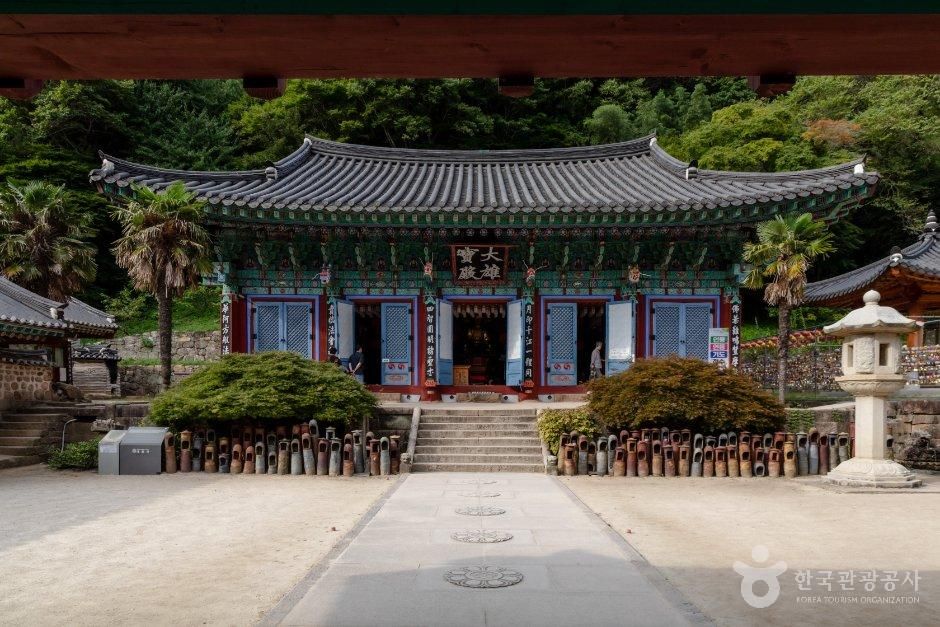
A temple built in 749 on the west side of Dalmasan Mountain, with the Main Buddha Hall and the Hall of Arhats, both Treasures. The foundation stones of the Main Buddha Hall are carved with sea creatures such as turtles and crabs. It is open at all times, every day of the year, with free admission and parking, and the 1-day temple program must be booked at least two days before the program's start date (061-533-3521).
- Hours
- Always open
- Closed days
- Open all year round
- Fee
- Free

-
3
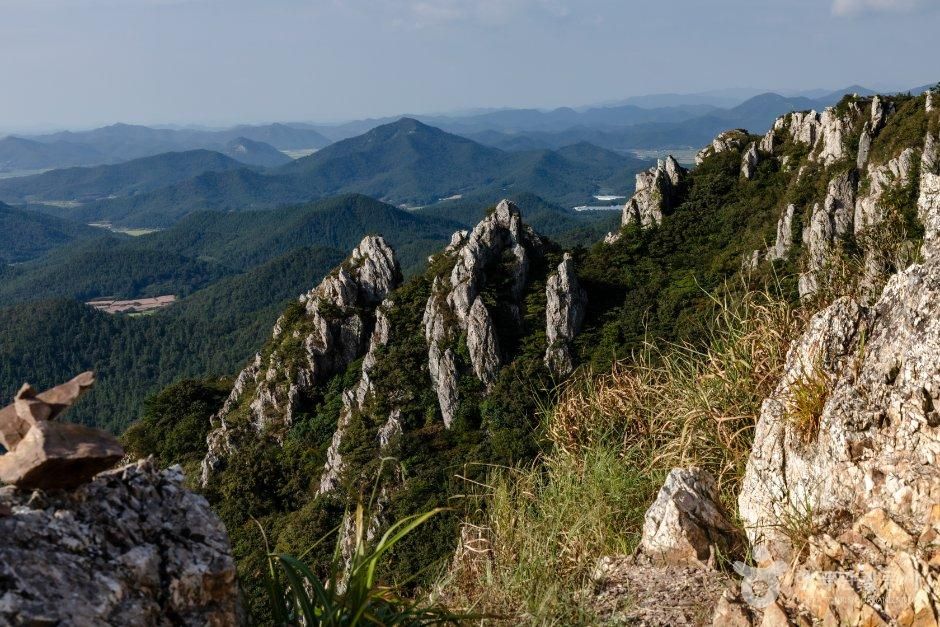
The only restored hermitage among the 12 hermitages of Dalmasan Mountain, it sits on a stone terrace on Dosolbong Peak at the top of Dalmasan Mountain, looking down on sunrises, sunsets and the islands of the southwestern sea. It burned down during the Jeongyu War and was rebuilt in 2002. It is open at all times with free admission and parking.
- Hours
- Always open
- Closed days
- Open all year round
- Fee
- Free
-
4
A hermitage with the Rock-Carved Seated Buddha at Bungmireugam Hermitage of Daeheungsa Temple (National Treasure), listed at the same address as Daeheungsa Temple, 400 Daeheungsa-gil. For inquiries, contact the Haenam County Culture and Arts Division, Cultural Heritage Team (061-530-5250) or Tourist Information (061-530-5915, 061-532-1330).
- Hours
- Not listed
- Closed days
- Not listed
- Fee
- Not listed
-
5
Cradle of Tea - Iljiam Hermitage
A hermitage that Seon Master Choui built in the valley of Daeheungsa Temple and where he practiced alone for more than 40 years. It is the reason Daeheungsa Temple is linked with tea culture. It is listed at the same address as Daeheungsa Temple, 400 Daeheungsa-gil. For inquiries, contact the Haenam County Culture and Arts Division, Cultural Heritage Team (061-530-5250) or Tourist Information (061-532-1330).
- Hours
- Not listed
- Closed days
- Not listed
- Fee
- Not listed
-
6
A temple partway up Botasan Mountain in Hwangsan-myeon, in a forest of camellia trees several hundred years old. Its main Buddha hall collapsed around 1938 and was rebuilt on a smaller scale using the original pillar timber. It is open at all times every day of the year, and parking is available.
- Hours
- Always open
- Closed days
- Open all year round
- Fee
- Not listed

-
7
A branch temple of Daeheungsa Temple partway up Ungeosan Mountain in Hwawon-myeon, with the Seated Wooden Triad of Buddhas, Treasure No. 1715, and a kudzu drum about 50 cm in diameter. The temple's camellia and torreya forest is Monument No. 245. It is open at all times, admission is free, and parking is available.
- Hours
- Always open
- Closed days
- Open all year round
- Fee
- Free

-
8
A temple partway up Wibong Peak, which extends south from Duryunbong Peak, looking down on Sanghwangbong Peak and the sea off Wando. Right next to the main Buddha hall is the Wish-Granting Jewel Rock (Jose Rock), 7–8 m high. It is open every day of the year, parking is available, and the temple's phone number is 061-535-1037.
- Hours
- Not listed
- Closed days
- Open all year round
- Fee
- Not listed
-
9
A Taego Order temple below Donghae Reservoir in Bukpyeong-myeon. When reservoir construction was going to put its old site underwater, it moved to its present location in 1994 and built a new main Buddha hall, Mountain Spirit Shrine and monks' quarters. It is open at all times every day of the year, and parking is available (061-533-1639).
- Hours
- Always open
- Closed days
- Open all year round
- Fee
- Not listed

-
10
A temple partway up the north side of Geumgangsan (481 m), whose Medicine Buddha Hall enshrines an iron Vairocana Buddha statue thought to date from early Goryeo. Its evening bell, called the 'Evening Bell at Eunsa,' has long been counted among the Eight Views of Haenam. It is open at all times with free admission and parking (061-532-5131).
- Hours
- Always open
- Closed days
- Open all year round
- Fee
- Free

-
11
A temple of the Taego Order of Korean Buddhism at the southern foot of Duryunsan Mountain, first built in 1909. It took its current name after being called Yangdoam and then Yangdosa. Its Hall of Paradise enshrines a triad of Amitabha, the Bodhisattva of Compassion and Ksitigarbha Bodhisattva, along with arhat statues, and it is open at all times with free admission and parking.
- Hours
- Always open
- Closed days
- Open all year round
- Fee
- Free

-
12
A branch temple of Daeheungsa Temple below the summit of Cheontaesan Mountain, with the Seven Stars Rocks, 7 rocks standing like a folding screen, behind it and a view of Namchang Port and Wando in front. You climb one hundred eight steps through a bamboo grove to the main Buddha hall, and it is open at all times with free admission and parking.
- Hours
- Always open
- Closed days
- Open all year round
- Fee
- Free

Photos: Korea Tourism Organization, Haenam County Culture and Tourism · KOGL Type 1, KOGL Type 4 (non-commercial, no changes allowed), KOGL Type 3 (no changes allowed)
FAQ
Which temples in Haenam can I contact about a templestay?
At Daeheungsa Temple, the Templestay Office (061-535-5775) takes inquiries, and the Administration Office number is 061-534-5502–3. Mihwangsa Temple runs a 1-day temple program that you can reserve until two days before the program start date, and its phone number is 061-533-3521.
Which temples in Haenam have free admission?
7 temples list their fee as free: Daeheungsa Temple, Mihwangsa Temple, Dosoram Hermitage, Seodongsa Temple, Eunjeoksa Temple, Jinheungsa Temple, and Taeyeongsa Temple. Of these, Daeheungsa Temple, Mihwangsa Temple, and Dosoram Hermitage have no closed days, and parking is available.
How far are Mihwangsa Temple and Dosoram Hermitage from Daeheungsa Temple?
In a straight line, it is 11.1 km from Daeheungsa Temple to Mihwangsa Temple, 14.6 km from Daeheungsa Temple to Dosoram Hermitage, and 3.4 km from Mihwangsa Temple to Dosoram Hermitage (these differ from the actual travel distances). Daeheungsa Temple is in Samsan-myeon, and Mihwangsa Temple and Dosoram Hermitage are in Songji-myeon.