It has a National Treasure, the rock-carved seated Buddha of Bungmireugam Hermitage. In the Great Master Seosan Relics Hall, you can see the jade bowl given by King Seonjo and Great Master Seosan's own handwriting, among others. Zen Master Choui built Iljiam Hermitage and practiced here, so the temple is closely tied to tea culture. Admission is free, there are no closing days, and parking is available.
Source: Korea Tourism Organization · KOGL Type 1 · 6 photos
Daeheungsa Temple Today
Worked out per date
Nov 4 (Wed)
Open
Sources: Hours and closed days: Korea Tourism Organization
Which attractions and restaurants in Haenam are open on Mondays?
Daeheungsa Temple in detail
Daeheungsa Temple: grounds divided into four areas in a mountain basin
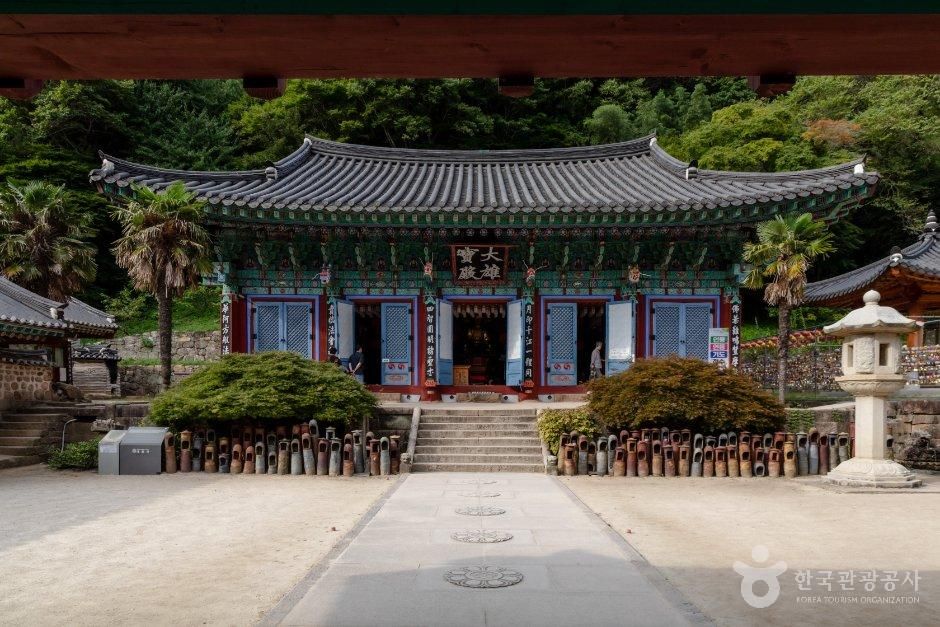
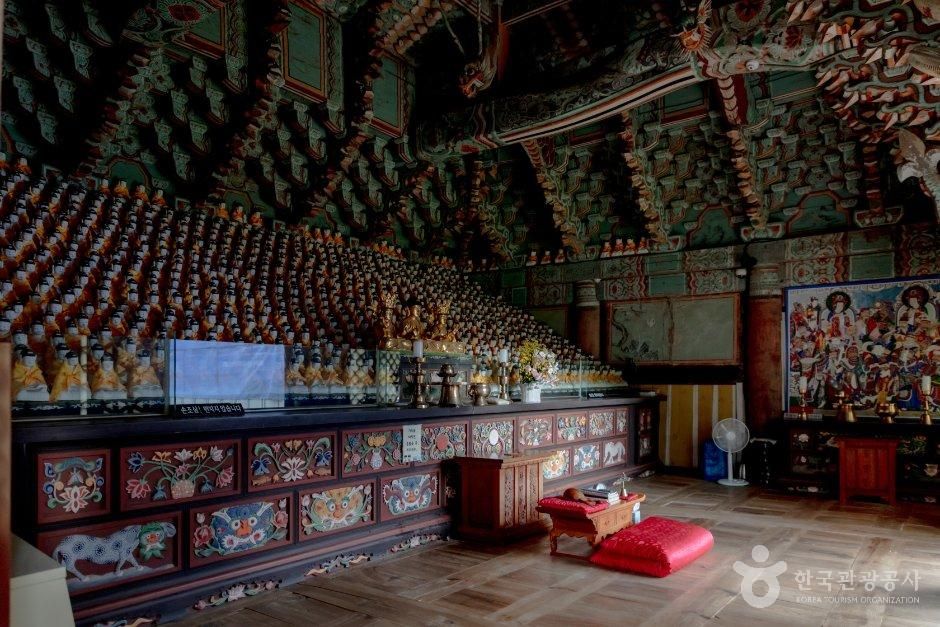
The grounds of Daeheungsa Temple sit in a wide mountain basin and are divided into four main areas. They are the Main Buddha Hall area, the wide Thousand Buddha Hall area in the middle, the Pyochungsa Shrine area (Great Master Seosan's shrine and relics hall) and the Great Light Hall area at the back. The halls are not lined up on a single axis but placed freely. source 1
Daeheungsa Temple: head temple of the Seosan lineage, heir to Great Master Seosan's robe and bowl
After the Imjin War, Great Master Seosan's robe and bowl were passed down here. Daeheungsa Temple then became the central temple of the Seosan lineage in the 17th–18th centuries. It served as a major practice center that embraced both the meditation and doctrinal schools. The stupas and stone monuments of the 13 great masters and 13 great lecturers remain on the grounds. Its designated cultural properties are 7 national and 6 provincial ones. source 1
Daeheungsa Temple: Iljiam Hermitage, where Zen Master Choui stayed for over 40 years, and the relics hall collection
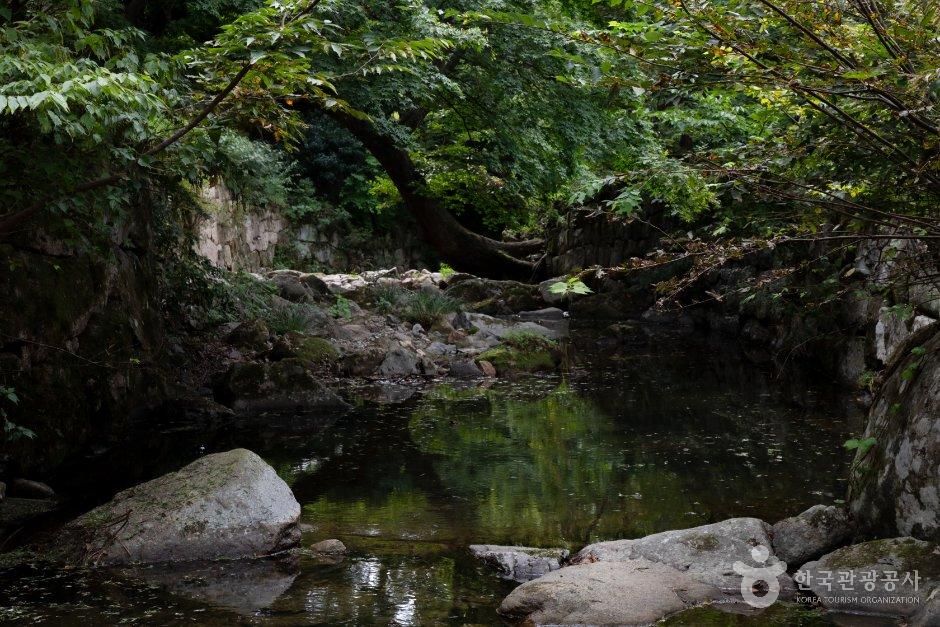
Zen Master Choui built Iljiam Hermitage in a valley of Daeheungsa Temple and practiced alone for more than 40 years. Because of this tie, Daeheungsa Temple came to be called the sacred place of Korean tea culture. Besides the jade bowl given by King Seonjo, the Great Master Seosan Relics Hall holds a jadeite bowl, a palanquin, shoes and Buddhist scriptures written in gold and silver. source 2






 Pyochungsa Shrinestraight-line 100 m
 Duryunsan Provincial Parkstraight-line 1.4 km

