From it you can look down on Sanghwangbong Peak, the sea off Wando and the islands on the sea. Right next to the main Buddha hall is Wish-Pearl Rock (Josebawi Rock), 7–8 m high, and two large rocks stand on both sides of the path to the main Buddha hall. There are no closing days, and parking is available.
Source: Haenam County Culture and Tourism · KOGL Type 4 (non-commercial, no changes allowed) · 3 photos
3 photos ↓ · Source: Haenam County Culture and Tourism · KOGL Type 4 (non-commercial, no changes allowed)
Seongdosa Temple Today
Worked out per date
Nov 4 (Wed)
Open
Sources: Hours and closed days: Korea Tourism Organization
How do Haenam's temples, Daeheungsa Temple, Mihwangsa Temple, and Dosoram Hermitage, differ?
Seongdosa Temple in detail
Seongdosa Temple: a mountain hermitage that was a stage for righteous armies and the anti-Japanese movement
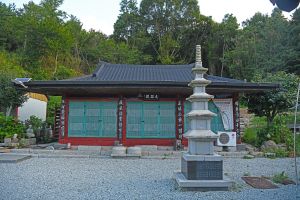
Seongdosa Temple was originally a hermitage belonging to Daeheungsa Temple, and it now belongs to the Wonhyo Order of Korean Buddhism. At the end of the Joseon period, righteous armies of Haenam and the southwestern coast were active here. During the Japanese colonial period, it was a stage for the anti-Japanese movement in Jeonnam. It was ruined during the Korean War (6·25), and its main Buddha hall, meditation hall and monks' quarters have recently been rebuilt. source 1
Seongdosa Temple: the dragon-head legend tied to Wish-Pearl Rock
Legend says a wall built long ago by a founding master monk collapsed every night. The site was shaped like a dragon's head, so the wall fell each time the dragon shook its head. When the monk placed a large wish-fulfilling pearl where the dragon's mouth was, the wall no longer collapsed. The rock that villagers call Josebawi Rock or Wish-Pearl Rock is that very stone. source 2
Seongdosa Temple: the gilt-bronze pensive bodhisattva and the standing stone Buddha
The temple has a gilt-bronze pensive bodhisattva and a standing stone Buddha that it has enshrined for a long time. The standing stone Buddha is the only statue that remained intact at the temple site destroyed during the Korean War (6·25). The temple sees it as a work of the early to middle Goryeo period, but there is no written record. The temple also sees the gilt-bronze pensive bodhisattva as a Baekje Buddha statue, but there is no material yet to support this. source 1


 Seongdoam Hermitagestraight-line 1.3 km
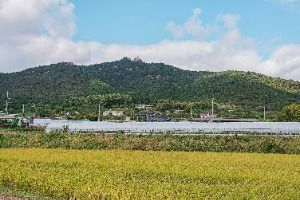 Haenam Kimchi Villagestraight-line 1.8 km


