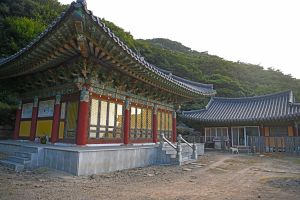
A nun, Kim Jinseonggak, founded it in 1909, and it took its present name after being called Yangdoam and then Yangdosa. Its Hall of Paradise enshrines a triad of Amitabha, the Bodhisattva of Compassion and Ksitigarbha Bodhisattva, along with arhat statues. It also has an Amitabha altar painting enshrined in 1937. It is open at all times, there is no admission fee, and parking is available.
Source: Korea Tourism Organization · KOGL Type 3 (no changes allowed) · 6 photos
6 photos ↓ · Source: Korea Tourism Organization · KOGL Type 3 (no changes allowed)
Jinheungsa Temple Today
Worked out per date
Nov 4 (Wed)
Open at all times
Sources: Hours and closed days: Korea Tourism Organization
Jinheungsa Temple before you go
Hours
Always open — source 1
Closed days
Open all year round — source 1
Fees
Free — source 1
Parking
Available — source 1
Contact
Haenam-gun Cultural Heritage Team 061-530-5250 Haenam-gun Tourist Information 061-532-1330 / 061-530-5915+82 61-530-5250, +82 61-532-1330, +82 61-530-5915 — source 2
Address
442 Ipje-gil, Hyeonsan-myeon, Haenam-gun, Jeonnam-Gwangju Special Metropolitan City — source 2
In Korean: 전남광주통합특별시 해남군 현산면 입제길 442
1Korea Tourism Organization TourAPI
2Korea Tourism Organization TourAPI · rechecked with Haenam County Culture and Tourism
Jinheungsa Temple photos 6
Jinheungsa Temple1/6Source: Korea Tourism Organization · KOGL Type 3 (no changes allowed)
Source: Korea Tourism Organization · KOGL Type 3 (no changes allowed)
How do Haenam's temples, Daeheungsa Temple, Mihwangsa Temple, and Dosoram Hermitage, differ?
Jinheungsa Temple in detail
Jinheungsa Temple: the Indra Heavenly King Monument at the entrance and the founder Jinseonggak's stupa
The 'Indra Heavenly King Monument' on the left at the temple entrance is a stone monument erected in June 1928, while the founder, the nun Jinseonggak (of the Gimhae Kim clan), was still alive. It first stood in front of the Dharma hall but was recently moved to its current spot, and right behind it is 1 stupa of Jinseonggak.
Jinheungsa Temple: the layout of its halls and the Buddhist paintings of the Hall of Paradise
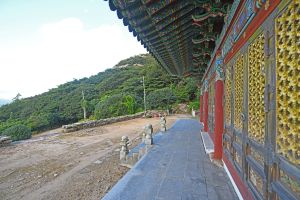
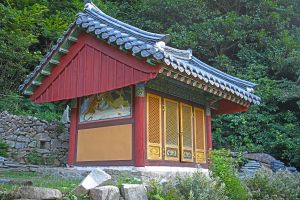
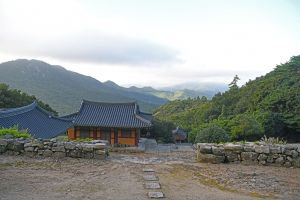
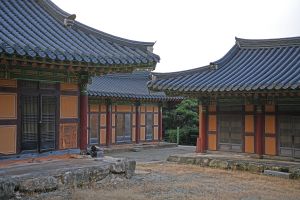
The temple has the Main Buddha Hall, the Hall of Paradise and monks' quarters. The Hall of Paradise and the monks' quarters stand side by side on a long east–west rectangular site. The building now used as the monks' quarters was originally the Dharma hall, and the Hall of Paradise was newly built to its right to enshrine the Buddha statues. The Hall of Paradise has a Seven Stars painting enshrined in 1975, recent Mountain Spirit and Guardian Deities paintings, and a small bell.
What is the stone monument at the entrance of Jinheungsa Temple?
It is the founder Jinseonggak's monument, carved with 'Indra Heavenly King Monument', and it was erected in June 1928. Behind it stands 1 stupa of Jinseonggak.
Was Jinheungsa Temple always called Jinheungsa?
No, it is not. It was first called Yangdoam, then Yangdosa, and then became Jinheungsa Temple.
Is there an admission fee for Jinheungsa Temple?
No, there is none. It is always open with no closing days, and parking is available.




 Haenam Forest Arboretumstraight-line 2.0 km


