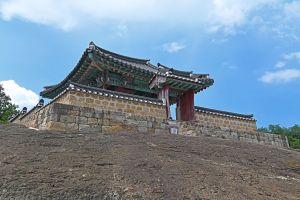
The inscription was composed in 1686, and Bak Sin-ju (then Right Naval Commander of Jeolla Province) erected it in 1688. It was moved to Gyeongbokgung Palace during the Japanese colonial period, then returned to Haenam, and in March 2011 it was moved again to the site where it was first erected. It is open at all times, and parking is available.
Source: Korea Tourism Organization · KOGL Type 3 (no changes allowed) · 6 photos
6 photos ↓ · Source: Korea Tourism Organization · KOGL Type 3 (no changes allowed)
Haenam Myeongnyang Victory Stele Today
Worked out per date
Nov 4 (Wed)
Open at all times
Sources: Hours and closed days: Korea Tourism Organization
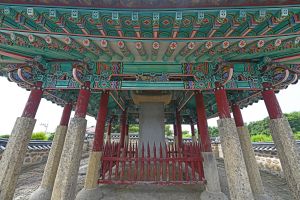
Haenam Myeongnyang Victory Stele: a Treasure with a capstone carved with clouds and dragons
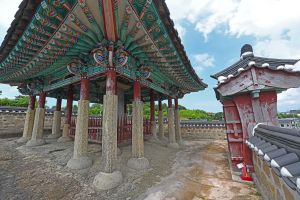
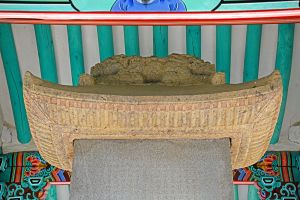
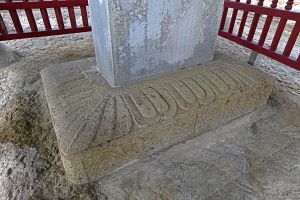
The stele has its body stone set into a rectangular base stone, topped with a capstone carved with cloud and dragon patterns. It was designated Treasure No. 503 on June 16, 1969, and Haenam-gun owns and manages it.
Haenam Myeongnyang Victory Stele: back to its original site by way of Chungmusa Shrine in Hakdong-ri
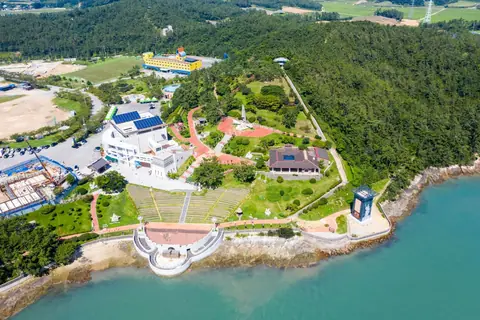
People of the former Jeolla Right Naval Headquarters found the stele, which had been moved to Gyeongbokgung Palace, and brought it back. In 1947 they built Chungmusa Shrine in Hakdong-ri, Munnae-myeon, and set up a pavilion to house it. Then in March 2011, it was moved to its present site in Dongoe-ri, Munnae-myeon, where it was first erected.
When was Haenam Myeongnyang Victory Stele erected?
The inscription was composed in 1686, and the stele was erected in 1688.
What does the inscription on Haenam Myeongnyang Victory Stele say?
It records how the Japanese fleet was defeated in the narrow, fast-flowing strait between Jindo and Usuyeong. It also records that about 10 ships destroyed 500 enemy ships.
Can I see Haenam Myeongnyang Victory Stele at any time?
It is open at all times with no closed days. Parking is available, and the contact number is 061-530-5225.




 Usuyeong Tourist Sitestraight-line 1.4 km
 Uldolmok Skywalkstraight-line 1.4 km


 Twin Bridgestraight-line 1.4 km

