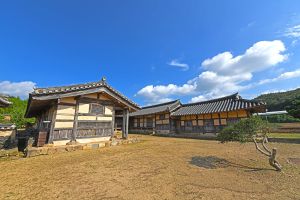
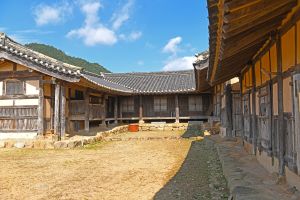
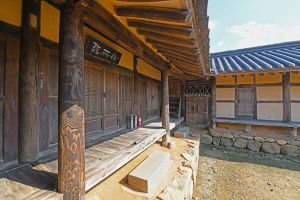
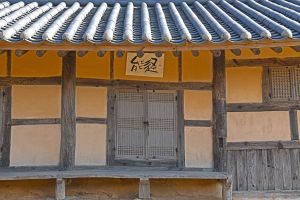
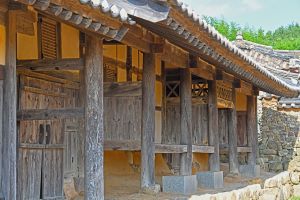
Built in 1670, it now keeps the inner quarters, a storehouse, a shed and a family shrine. It is distinctive for a roof laid low rather than raised high, to keep out the sea wind. It is open at all times and has no admission fee, but viewing may be blocked depending on the owner's circumstances, and parking is not available.
Source: Korea Tourism Organization · KOGL Type 3 (no changes allowed) · 6 photos
6 photos ↓ · Source: Korea Tourism Organization · KOGL Type 3 (no changes allowed)
Haenam Gongjae Old House Today
Worked out per date
Nov 4 (Wed)
Open at all times
Sources: Hours and closed days: Korea Tourism Organization
Haenam Gongjae Old House before you go
Hours
Always open — source 1
Closed days
Open all year round — source 1
Fees
Free — source 1
Parking
Not available — source 1
Contact
Haenam-gun Cultural Heritage Team 061-530-5250 Haenam-gun Tourist Information 061-532-1330 / 061-530-5915+82 61-530-5250, +82 61-532-1330, +82 61-530-5915 — source 2
Address
122 Baekpo-gil, Hyeonsan-myeon, Haenam-gun, Jeonnam-Gwangju Special Metropolitan City — source 2
In Korean: 전남광주통합특별시 해남군 현산면 백포길 122
1Korea Tourism Organization TourAPI
2Korea Tourism Organization TourAPI · rechecked with Haenam County Culture and Tourism
Haenam Gongjae Old House photos 6
Haenam Gongjae Old House1/6Source: Korea Tourism Organization · KOGL Type 3 (no changes allowed)
Source: Korea Tourism Organization · KOGL Type 3 (no changes allowed)
Haenam Gongjae Old House: built by Yun Seon-do and lived in by his great-grandson Yun Du-seo
Gongjae Yun Du-seo is counted with Gyeomjae Jeong Seon and Hyeonjae Sim Sa-jeong as one of the 'Three Jae' painters of the late Joseon period. He was the great-grandson of Gosan Yun Seon-do and the maternal great-grandfather of Dasan Jeong Yak-yong. Yun Seon-do built this house on a site with good feng shui but left because the sea wind was too strong. Yun Du-seo then moved in and lived here. At first it was a 48-bay house with a gatehouse and men's quarters, but a fire around the Japanese colonial period took away much of its old look.
Haenam Gongjae Old House: the 1811 renovation in the ridge-beam text and the original closed-square plan
The repair record left on the beam under the ridge purlin of the inner quarters shows that the house was first built in 1670, a gyeongsul year. It was largely repaired in August 1811, 142 years later. An eave-end tile once bore writing saying the roof was repaired again in September 1871, but it can no longer be seen since restoration work. The house was originally a closed square, but one side west of the inner quarters was torn down, so it is now U-shaped.
Haenam Gongjae Old House: folk paintings on the shrine walls and a sago palm by the stone steps
The shrine is on the left of the path from the shed to the main gate, above and to the right of the inner quarters. Its walls have folk-painting-style pictures. To the right of the stone steps up to the shrine are sago palms, and on the wall to the left is ivy. In a nearby village, 10 tile-roofed houses of the Haenam Yun family also remain.
It is open at all times and every day of the year, and there is no admission fee. However, viewing may be blocked depending on the owner's circumstances.
What buildings remain at Haenam Gongjae Old House?
It was first a 48-bay house, but now the U-shaped inner quarters, the storehouse, the shed and the shrine remain.