It is also called Jangchungol because it stays green all year, and its shallow water lets children play in it in summer. It is open all year round with no closing days, use is free, and parking is available.
Source: Korea Tourism Organization · KOGL Type 1
Daedunsa Valley Today
Worked out per date
Nov 4 (Wed)
Open at all times
Sources: Hours and closed days: Korea Tourism Organization
Full bar = straight-line 2.0 km · Within 2,000 m · straight-line distance · Korea Tourism Organization
Photos: Korea Tourism Organization · KOGL Type 1, KOGL Type 3 (no changes allowed), Haenam County Culture and Tourism · KOGL Type 4 (non-commercial, no changes allowed)
Daedunsa Valley: an old tree tunnel over the first 2 km to the temple
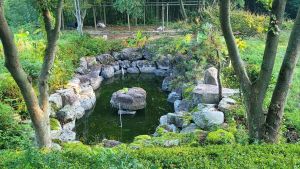
The first 2 km of the road to Daeheungsa Temple is thick with trees hundreds of years old, giving deep shade in summer and fall foliage in autumn. Cherry, oak, zelkova, camellia, and maple trees line up between the red pines that rise here and there, forming a forest tunnel.
Daedunsa Valley: a forest that Great Master Seosan named as land free from disaster
Great Master Seosan picked this spot as land that would escape disaster and keep its paths clean. It indeed never went through war, so old trees have grown into a forest. On the left side of the valley, a paved road runs alongside it up to Daeheungsa Temple.
Source: Korea Tourism Organization TourAPI
Daedunsa Valley FAQ
Can children play in the water at Daedunsa Valley?
The water is not deep, so it suits children playing in the water in summer. There are many shade trees, and the valley is wide.
How long is Daedunsa Valley?
It runs for about 4 km from the entrance of Daeheungsa Temple (Daedunsa Temple).
Can I see fall foliage at Daedunsa Valley?
Yes. In autumn, the old trees along the 2 km section from the temple entrance take on fall colors.


 Deobureosup Agricultural Companystraight-line 710 m
 Duryunsan Cable Carstraight-line 880 m


 Sanmaruteostraight-line 760 m

Duryunsan Tourist Pensionstraight-line 1.0 km
 Haenam Youth Hostelstraight-line 1.1 km


